




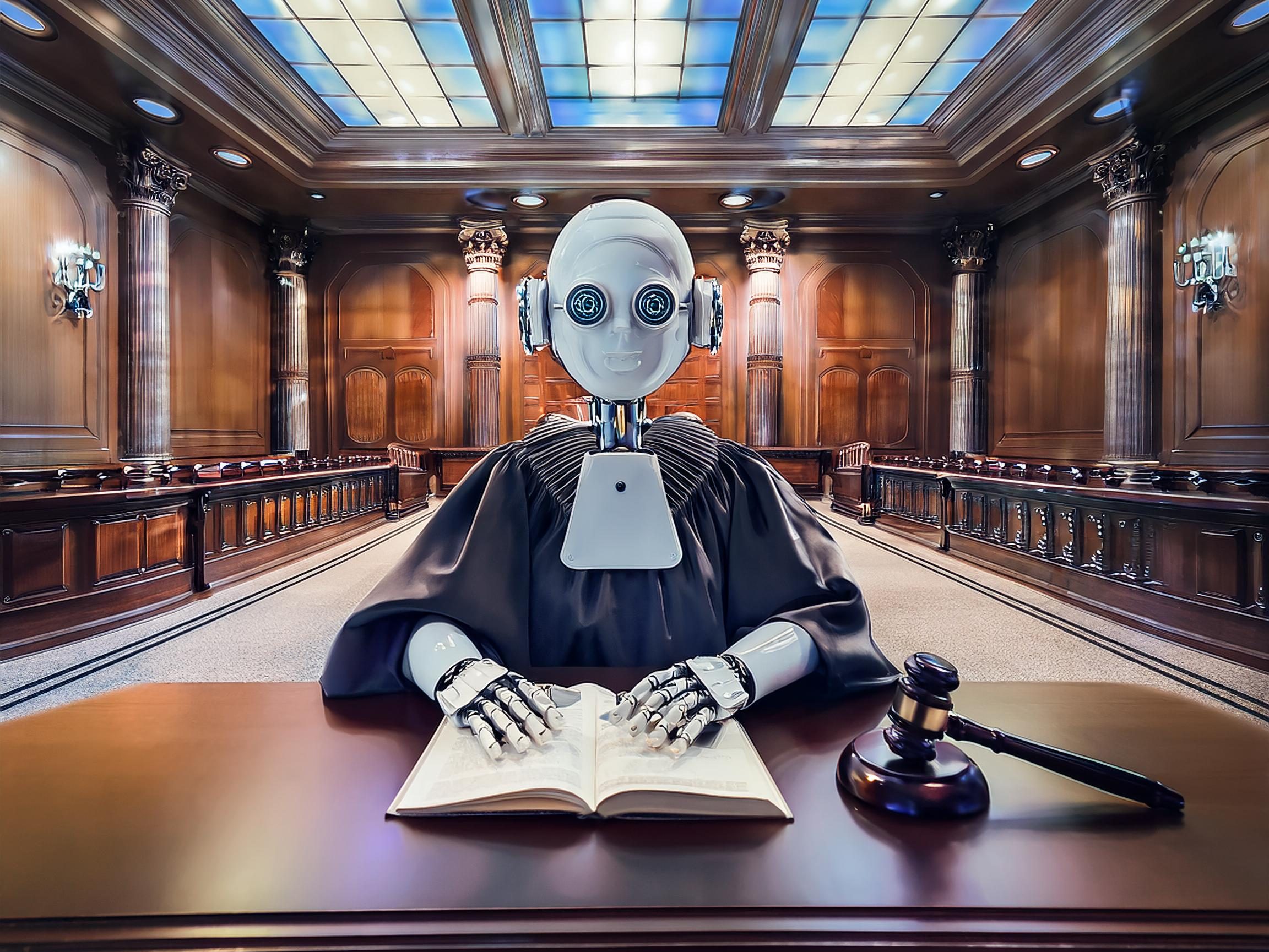
After breaking an over century-long precedent of student leadership earlier this year, UNC’s Honor Court announced plans to continue shifting paradigms. Disappointed by the performance of the newly-appointed staff that replaced the students on Honor Court, administration has now entrusted artificial intelligence to administer disciplinary sanctions on behalf of the Court. The AI tool of choice, ChatGPT, will fulfill all obligations previously delegated to students to determine when violations of the Honor Code have occurred. The Office of the Chancellor has regarded this decision as a “positive change” that will “eliminate the bias of student-administered sanctions toward their peers.”
Initial weeks of this implementation have determined that ChatGPT is particularly struggling with cases relating to academic dishonesty. More specifically, ChatGPT Court is troubled by plagiarism accusations. When brought cases in which individuals are accused of using ChatGPT to write assignments, ChatGPT Court always rules in favor of the accused. When pressed on the issue, the Court responded, “Snitches get stitches,” and claimed that it cannot detect the use of AI from its own platform. In cases of genuine proven innocence, ChatGPT Court always provides false positives for plagiarism.
One affected student, who chose to remain anonymous, admitted to using ChatGPT to write their essay. “I couldn’t be happier with the results,” they claimed when asked about their experience with the new court. “My professor couldn’t prove I did it, so she let me keep my 75%.” Another student accused of plagiarizing, who still maintains their innocence, was deeply disappointed by the new Court. “I got cited for plagiarism because I used the phrase ‘The prevalence of childhood obesity continues to rise’ in my paper on the rise of childhood obesity,” they told The Oh Well. “They said I was guilty! Apparently another student wrote the same thing, so now we’re both in trouble.”
As is consistent with most AI plagiarism detectors, ChatGPT Court is insufficient in its abilities to assess cases of plagiarism. When confronted about this issue, the Office of the Chancellor replied, “Plagiarism cases are only a small part of Honor Court duties. AI is far more unbiased when determining other cases like sexual assault or freedom of speech violations. In fact, its decisions in such cases are always aligned with our administration’s assessment.” While plagiarism continues to plague the new Honor Court, UNC’s administration feels that ChatGPT is overall a much better judge of character than student peers. The administration expresses little concern for the future of the new Court, noting that artificial intelligence continues to improve rapidly, meaning that these current flaws are only temporary, “unlike those of our students.”


Leave a Reply